A BLDC fan earns its place on a factory floor only when its airflow reaches occupied work areas, its installation suits the building, and its electricity savings repay the extra cost. You can decide that by matching fan performance to the bay layout, modelling the site's operating hours and tariff, and checking Chennai-specific corrosion, safety and maintenance risks.
Key takeaways
- Measure occupied-bay air movement before choosing fan wattage.
- Size fans by mounting height, coverage, obstructions and worker locations.
- Calculate payback from measured operating hours, tariff and actual watt draw.
- Demand airflow data, warranty terms, service support and installation drawings.
When does a BLDC fan make sense on a factory floor?
A BLDC fan makes sense when measured air movement reaches workers across the occupied bay. Lower wattage alone proves little: the fan does not lower dry-bulb temperature or remove Chennai’s humidity; it moves air across skin and improves perceived comfort.
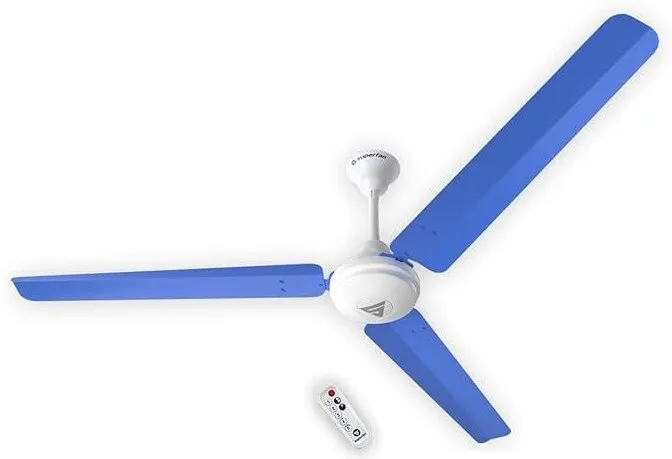
A 25 W fan covering a small patch can be a poorer energy saving ceiling fan for factory use than a higher-input model delivering useful airflow across the whole work area.
| Option | Service value | When it makes sense |
|---|---|---|
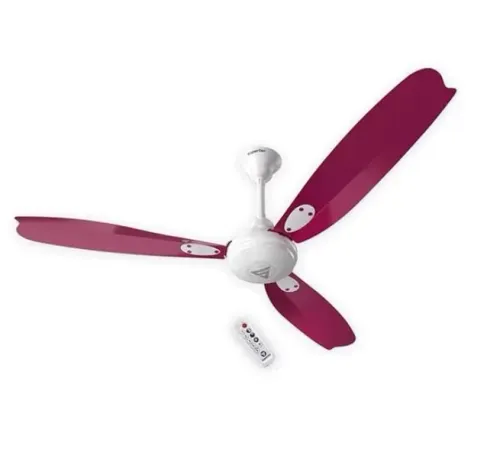
| Standard ceiling fan | Localised worker-level airflow | 36-inch or 56-inch models suit modest heights and clear bays; they fail when the roof is high, machinery blocks the plume or the occupied area is wide |
| HVLS fan | Broad, lower-velocity floor coverage | High-ceiling bays needing airflow across many stations |
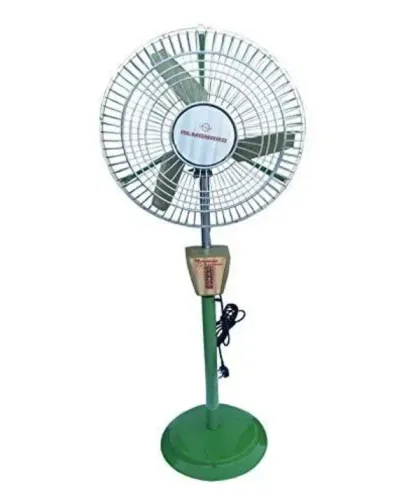
| Wall-mounted or pedestal fan | Directed, relocatable airflow | Changing workstations, obstructions or maintenance zones |
| Destratification fan | Moves hot roof-level air downward | Heat accumulating near the roof; it does not directly cool workers |
Require performance data tested under IS 374 conditions, showing input power, speed and air delivery or service value. Compare those figures with the bay’s occupied area, not watts alone. Choose the equipment that creates measurable worker-level airflow without blocking cranes, lights, sprinklers or access, and without undermining exhaust or other ventilation.
How should you size and position fans in each production bay?
Use the manufacturer’s coverage and clearance data to determine fan quantity, then map each production bay’s length, width, ceiling height, worker stations and obstructions. A residential blade span does not prove that one bldc ceiling fan for factory in chennai will move air across an industrial floor.
- Mark dead zones behind presses, storage racks, mezzanines, ducts and partitions; air that never reaches worker level provides no comfort benefit.
- Check blade and motor clearance from cranes, hoists, sprinkler heads, light fittings, exhaust ducts, racks and moving machinery.
- Confirm that the roof structure carries the fan, bracket and dynamic loads. Have a structural engineer or competent installer approve attachment to a purlin or truss; never rely on sheet-metal roofing.
- Use the specified anchor, drop rod, safety wire and vibration-control hardware.
- Keep positions clear of sprinkler spray patterns, emergency routes and maintenance platforms.
- Record every fan’s mounting height, coverage area and control zone.
Several small fans can create uneven airflow and more maintenance points. One larger fan can obstruct more space and create a greater consequence if it fails, so compare both layouts against the bay map rather than floor area alone.
After installation, measure air movement at worker level or complete a commissioning check. Redirect or add equipment where stagnant areas remain; in very high bays, compare the result with HVLS or engineered ventilation instead of forcing small ceiling fans into an unsuitable layout.
How do you calculate BLDC payback from a factory's real load profile?
A BLDC fan for industrial facility in Chennai earns back its cost only when measured operating hours and the facility’s marginal tariff support the claim. Calculate annual avoided energy as:
(old fan input watts − BLDC fan input watts) × operating hours × number of fans ÷ 1,000
1. Replace assumptions with records. Count shifts per day, operating days, seasonal shutdowns, standby hours, speed settings and periods when fans run alongside air-conditioning, exhaust fans or evaporative coolers. A fan that runs fewer hours saves less.
2. Use a worked check. Replacing 80 W induction-motor fans with 35 W BLDC fans across 20 positions, running 12 hours daily for 300 days, avoids 45 × 12 × 20 × 300 ÷ 1,000 = 3,240 kWh annually. At a marginal tariff of ₹9 per kWh, gross energy saving is ₹29,160 per year.
3. Divide the incremental cost by annual saving. If purchase and installation cost ₹60,000 above the replacement alternative, simple energy payback is ₹60,000 ÷ ₹29,160, or about 2.1 years before maintenance and controls. Use your electricity invoices and quotations, not a household tariff.
4. Check the bill for demand charges. Lower fan input reduces connected or maximum demand only when billing demand responds to the changed load; confirm this in the tariff structure. Add controller replacement, cleaning, installation access and downtime to life-cycle cost before approving the project.
What Chennai site conditions can make a BLDC installation fail?
A standard BLDC fan is not suitable for every Chennai factory. Salt-laden coastal air, high humidity, dust, roof heat, monsoon water ingress and chemical vapours can corrode hardware or destroy electronics while the blades still appear serviceable.
1. Inspect the exposure. Specify corrosion-resistant fasteners, protected controller electronics, and a suitable coating or plating. Increase inspection frequency when salt or dust settles on blades, guards or control housings. Record cleaning dates, findings and corrective work in a documented schedule.
2. Read the exact IP code and the test conditions behind it. An outdoor-use claim does not prove dust protection, washdown resistance or chemical resistance. IP protection does not establish corrosion resistance or explosion protection, so obtain separate evidence for each hazard.
3. Classify the area before purchase. If combustible gas, vapour, dust or fibres can create a classified area, identify its zone, gas or dust group and temperature class. Select the required protection concept and certificate. A remote-controlled BLDC fan is not flame-proof because its motor runs cooler.
4. Check the electrical specification: permissible voltage range, transient or surge protection, protective earthing, controller replacement availability and automatic restart after power failure. BLDC electronics can fail through surges, poor earthing, moisture or heat even when bearings and blades remain intact.
5. Approve the installation only after checking roof vibration, mounting hardware, structural attachment and maintenance access. Keep the controller away from direct water and chemical exposure, and ensure technicians can inspect and clean it without unsafe access equipment.
What should you demand from a Chennai supplier before approving the purchase?
Approve a quotation only when it describes a tested system, not just a low wattage. A credible BLDC ceiling fan dealer in Chennai will identify the exact model, test condition and airflow behind every energy-saving claim.
| Supplier type | Evidence in the quotation | Decision |
|---|---|---|
| Documented industrial offer | Rated input power at the required speed, speed range, air-delivery or service-value test data, operating voltage, controller type, mounting arrangement, warranty exclusions, spare-controller availability and installation requirements | Compare on airflow, safety and life-cycle cost |
| Generic low-price offer | Wattage and price without test conditions, coverage data or replacement-controller terms | Reject until the missing evidence is supplied |
Demand a layout review marking fan positions, blade clearances, sprinkler heads, lights, cranes, ducts and racks. Reject a fan count based only on floor area; confirm mounting height, structural attachment, safety wire, maintenance access and worker-level coverage.
Confirm that the equipment is intended for an industrial production area. Where the site requires it, obtain separate documents for the exact IP rating, corrosion resistance and hazardous-area protection. A normal remote-controlled fan is not flame-proof.
For a solar- or DC-labelled fan, do not connect it to a factory battery bus until the wiring diagram confirms DC operation, battery-voltage range, low-voltage cut-off, switching and protection. Shine Agencies can help coordinate a quotation covering fans, ventilation and industrial lighting, but the supplier must substantiate each assumption.
Approve only when measured coverage, safe mounting, site compatibility and calculated payback pass. Otherwise choose HVLS, wall-mounted or engineered ventilation equipment.
Frequently asked questions
When does a BLDC fan make sense on a factory floor?
Choose one when measured airflow reaches occupied work areas and the goal is improved perceived comfort. A fan moves air across skin; it does not reduce dry-bulb temperature or remove Chennai humidity.
How should you size and position fans in each production bay?
Assess bay dimensions, ceiling height, obstructions, heat sources and occupied zones. Use the manufacturer’s coverage and airflow data, then position fans so columns, ducts and machinery do not block circulation.
How do you calculate BLDC payback from a factory’s real load profile?
Compare measured BLDC wattage with the existing fan load, multiply the difference by operating hours and electricity tariff, then divide purchase and installation cost by annual savings.
What Chennai site conditions can make a BLDC installation fail?
Check for coastal salt exposure, dust, heat, humidity, voltage variation, roof leakage, inadequate mounting structure and water ingress. Specify suitable protection, mounting and maintenance provisions before installation.
What should you demand from a Chennai supplier before approving the purchase?
Request airflow and wattage test data, coverage guidance, mounting details, warranty exclusions, spare-parts availability, installation scope, service response terms and a written quotation.
Keywords